


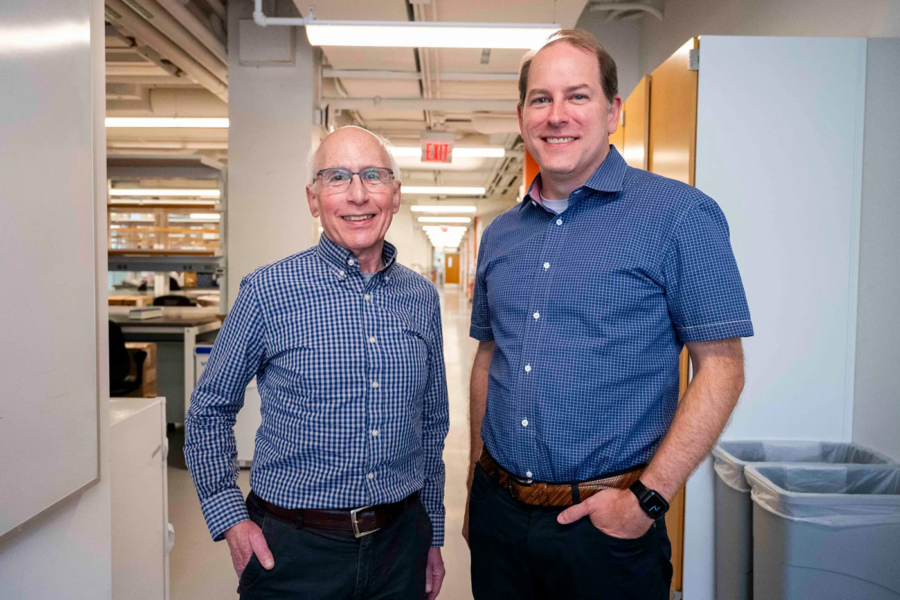
With support from the Cystinosis Research Foundation (CRF), Harvard University researchers Dr. Feodor Price and Dr. Lee Rubin are advancing important work to better understand the causes of progressive muscle weakness in cystinosis and identify potential paths toward future therapies. Their work on “Characterizing Both the In Vitro and In Vivo Myogenic Potential of Skeletal Muscle Progenitors from Cystinosis Patients” is especially relevant to adults living with cystinosis. Since 2024, the CRF has awarded $546,830 to support their research. This recent research update highlights encouraging progress in characterizing the muscle-building potential of skeletal muscle progenitor cells in cystinosis.
Dr. Feodor Price and Dr. Lee Rubin – Progress Report
“Characterizing both the in vitro and in vivo myogenic potential of skeletal muscle progenitors from cystinosis”
Lay Abstract: Muscle has a remarkable built-in ability to repair itself throughout life, thanks to a small population of muscle stem cells that activate after injury to rebuild damaged tissue. In cystinosis, it has been unclear whether the progressive muscle weakness originates from a defect in these stem cells or in the mature muscle fibers they maintain. This year, we investigated cystinosis patient-derived myogenic cells’ ability to grow, differentiate, mature into muscle fibers, and revert to a stem-like state, a cycle essential for long-term muscle repair capacity. While cystinosis-derived cells multiplied normally, they struggled to complete later steps of muscle formation and to return to a stem cell state, pointing to a specific defect in muscle-building rather than a general growth problem. This is an encouraging distinction, as it suggests the defect may be more targeted, and potentially easier to treat. These findings are a first step toward identifying factors that could enhance the myogenic capacity of muscle stem cells in cystinosis patients. In parallel, we are conducting muscle regeneration studies using a cystinosis mouse model. It will let us test these findings in living tissue and eventually explore whether transplanting healthy muscle stem cells can restore function, which constitutes a critical step toward future cell-based therapies for patients.